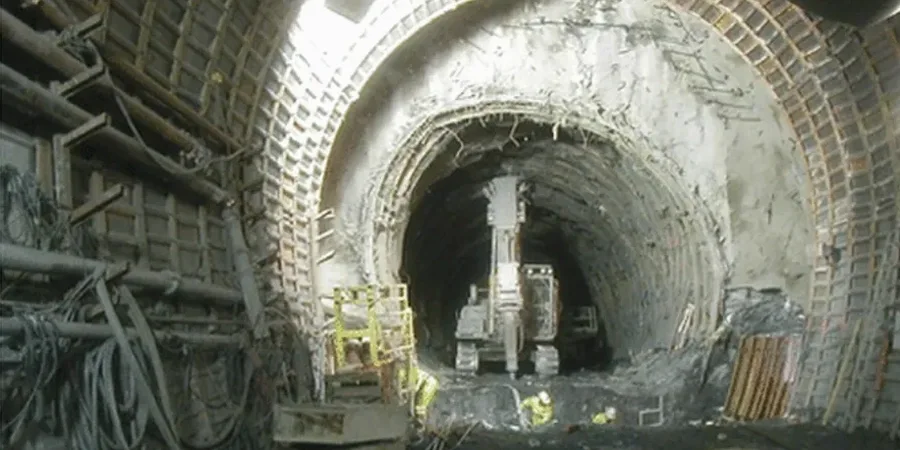
Excavation works in Christchurch demand a level of care and technical precision that goes well beyond standard earthmoving. This category encompasses the full lifecycle of creating open cuts, trenches, shafts, and basements in the city's uniquely challenging ground conditions. From the initial geotechnical investigation through to temporary works design, construction support, and long-term performance monitoring, every phase must account for the legacy of the Canterbury earthquake sequence. Professionals operating here must integrate structural engineering with a deep understanding of soil-structure interaction, groundwater control, and seismic resilience. The stakes are high: a poorly executed excavation can destabilise adjacent buildings, rupture buried utilities, or trigger ground collapse, making specialist input not just advisable but essential for project success and community safety.
Christchurch's subsurface is dominated by the complex fluvial and marine sediments of the Canterbury Plains, overlaying the artesian aquifer system that the city is built upon. The 2010–2011 earthquakes fundamentally altered these soils, inducing widespread liquefaction and lateral spreading that remoulded strength profiles across entire suburbs. Much of the central city and eastern areas are underlain by loose, saturated fine sands and silts with a high liquefaction susceptibility, interbedded with softer peats and estuarine clays. This stratigraphy creates a dual challenge: excavations must be designed to remain stable in materials that can rapidly lose strength under dynamic or even static pore pressure shifts, while simultaneously managing groundwater inflows that can cause base heave or piping. The presence of the Riccarton Gravel, a deep high-yield aquifer, adds another layer of complexity, as dewatering operations must comply with strict environmental controls to prevent off-site settlement and ecological damage.
The regulatory framework governing excavations in Christchurch is rigorous, reflecting the city's hard-won experience with earthquake damage. All significant works must align with the New Zealand Building Code, specifically Clause B1 (Structure), which mandates that excavations preserve the stability of adjoining property and public infrastructure. The Ministry of Business, Innovation and Employment (MBIE) guidelines for earthquake-prone buildings often trigger detailed excavation assessments when deepening basements near existing structures. At a local level, the Christchurch District Plan enforces strict rules around earthworks volumes, sediment control, and groundwater take consents administered by Environment Canterbury. For deep digs, compliance with NZS 4404:2010 for land development and the New Zealand Geotechnical Society's guidelines for retaining wall and slope stability is mandatory. A critical requirement is the production of a Construction Monitoring Plan, supported by robust geotechnical excavation monitoring to validate design assumptions in real time.
The types of projects that demand this category's expertise are diverse and growing as Christchurch undergoes its post-quake rebuild and intensification. Deep basement excavations for commercial towers in the Te Kaha multi-use arena precinct require advanced temporary support systems, which is where geotechnical design of deep excavations becomes the cornerstone of buildability and safety. Infrastructure upgrades, such as the installation of large-diameter stormwater trunks or trenchless pipe replacements through liquefiable zones, rely on geotechnical analysis for soft soil tunnels to predict face stability and ground settlement. Residential hillside developments in the Port Hills demand careful cut-and-fill analysis to manage loess collapsibility and rockfall risk. Even smaller-scale projects, like a hospital basement in a high-liquefaction zone or a pump station shaft, cannot proceed without a defensible excavation methodology that has been peer-reviewed against the latest seismic understanding.
The 2010–2011 earthquakes permanently altered Christchurch's soil fabric, introducing widespread liquefaction susceptibility and variable strength loss in the shallow sands and silts. Combined with a high artesian groundwater table and interbedded soft clays, excavations face simultaneous risks of base instability, piping, and seismic deformation. This demands a design approach that integrates advanced soil-structure interaction analysis with robust dewatering and monitoring strategies not typically required in more stable geological settings.
Key triggers include proximity to an earthquake-prone building, which invokes MBIE guidelines for protecting adjoining structures, and any excavation exceeding 1.5 metres depth in a liquefaction-prone zone, which requires specific Building Code Clause B1 compliance. The Christchurch District Plan also mandates resource consent for earthworks over certain volume thresholds and for any groundwater take, requiring an approved dewatering management plan from Environment Canterbury before works commence.
The loose, saturated sands common in Christchurch offer very low passive resistance, making cantilever soldier pile walls risky without adequate embedment. Systems like secant pile walls or diaphragm walls are often necessary to cut off groundwater flow and provide positive base restraint. In areas with thick peat layers, ground improvement such as jet grouting or deep soil mixing may be required before excavation to create a stable working platform and prevent rotational failure of the support wall.
Monitoring is not just a verification tool but a critical safety system. Real-time inclinometers, piezometers, and settlement points track wall deflection and pore pressure changes during staged dewatering. This data is checked against trigger levels daily to detect early signs of base heave or piping, allowing immediate corrective action. Such adaptive management is essential because Christchurch's remoulded soils can transition from stable to failing with very little warning, especially under dynamic construction loads.
We serve projects across Christchurch and surrounding areas. More info.