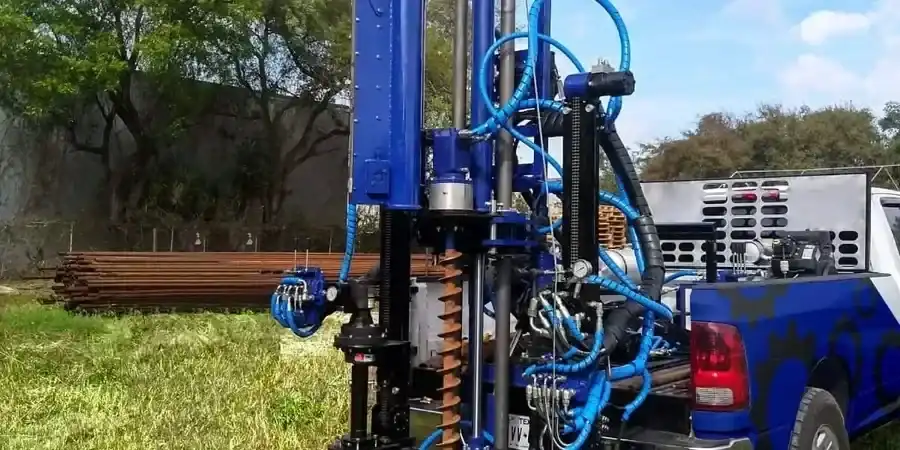
Geotechnical investigation in Christchurch is far more than a routine step in construction—it is a critical safeguard shaped by the region’s seismic history and complex ground conditions. This category encompasses all subsurface exploration, sampling, and in‑situ testing methods used to characterise soil and rock properties, assess liquefaction potential, and determine bearing capacity. Following the devastating 2010–2011 Canterbury earthquake sequence, the importance of rigorous site investigation became undeniable, as widespread liquefaction, lateral spreading, and ground settlement caused catastrophic damage to buildings, infrastructure, and lifelines. Today, a thorough investigation is the foundation upon which safe, resilient, and insurable structures are designed in Christchurch.
The local geology is dominated by the Canterbury Plains, a vast alluvial fan composed of interbedded gravels, sands, silts, and clays deposited by braided rivers over millennia. Much of Christchurch city sits on Holocene‑age fluvial and estuarine sediments that are particularly vulnerable to liquefaction. Shallow groundwater tables, often within 1–3 metres of the surface, exacerbate this risk. The variability of these deposits—both laterally and vertically—means that conditions can change dramatically within a single site. This heterogeneity demands a tailored investigation strategy, often combining traditional boreholes with advanced methods like the CPT (Cone Penetration Test) to capture detailed, continuous profiles of soil behaviour under load and cyclic stress.
Regulatory requirements in New Zealand are stringent and directly informed by the lessons of the Canterbury earthquakes. All geotechnical investigations must comply with the Building Act 2004 and the New Zealand Building Code, specifically Clause B1 (Structure) and B2 (Durability). The Ministry of Business, Innovation and Employment (MBIE) has issued detailed guidance—most notably the Guidance for Geotechnical Investigation and Assessment—which references international standards such as NZS 1170.5 for seismic actions and NZGS guidelines for liquefaction assessment. Investigations for residential, commercial, and industrial projects in Christchurch must address the technical categories (TC1, TC2, TC3) defined by the Canterbury Geotechnical Database, which classify land based on its response to earthquake shaking. A robust investigation must provide sufficient data to determine foundation type, depth, and any necessary ground improvement, all while satisfying the expectations of consenting authorities and insurers.
Virtually every project that disturbs the ground or imposes new loads requires some form of geotechnical investigation. This ranges from single‑dwelling residential builds on TC2 or TC3 land—where shallow foundation solutions may be inadequate—to large‑scale commercial developments, roading and bridge infrastructure, retaining walls, and land remediation schemes. Post‑earthquake rebuilds and subdivisions often demand detailed liquefaction analysis, while industrial facilities with sensitive equipment may need vibration and settlement assessments. Even minor alterations or additions can trigger the need for updated site characterisation if they increase foundation loads or change drainage patterns. The CPT (Cone Penetration Test) has become a cornerstone of many Christchurch investigations, offering rapid, cost‑effective data on soil stratigraphy, relative density, and liquefaction resistance without the need for extensive drilling and sampling alone.
Geotechnical investigations are mandatory to comply with the Building Act 2004 and the New Zealand Building Code, particularly in areas prone to liquefaction and lateral spreading. Christchurch’s post‑earthquake regulatory environment requires site‑specific data to classify land (TC1–TC3), design appropriate foundations, and satisfy consenting authorities and insurers. Without it, you risk structural failure, costly remediation, or inability to obtain building consent.
TC1 land is considered stable with low liquefaction potential, typically requiring standard investigations. TC2 indicates moderate liquefaction vulnerability, needing more detailed assessment and possibly specific foundation solutions. TC3 is the most challenging, with high liquefaction or lateral spreading risk, demanding comprehensive investigation—often including CPT and rigorous analysis—to engineer deep or ground‑improved foundations. The classification directly drives the investigation’s depth, methods, and cost.
Christchurch’s interbedded alluvial sands, silts, and gravels with shallow groundwater create high liquefaction susceptibility. This favours in‑situ testing like the Cone Penetration Test (CPT) for continuous, reliable data on soil density and cyclic resistance. Boreholes with sampling are used for classification and laboratory testing, while geophysical methods may map gravel layers. The variable geology often requires a combination of techniques to capture lateral and vertical heterogeneity accurately.
A compliant report must detail site geology, groundwater conditions, and a liquefaction assessment per MBIE and NZGS guidelines. It should present borehole logs, CPT profiles, laboratory results, and foundation recommendations addressing bearing capacity, settlement, and seismic performance. The report must clearly state the applicable technical category (TC1–TC3) and justify proposed ground improvements or foundation types, all signed by a Chartered Professional Engineer.
We serve projects across Christchurch and surrounding areas. More info.