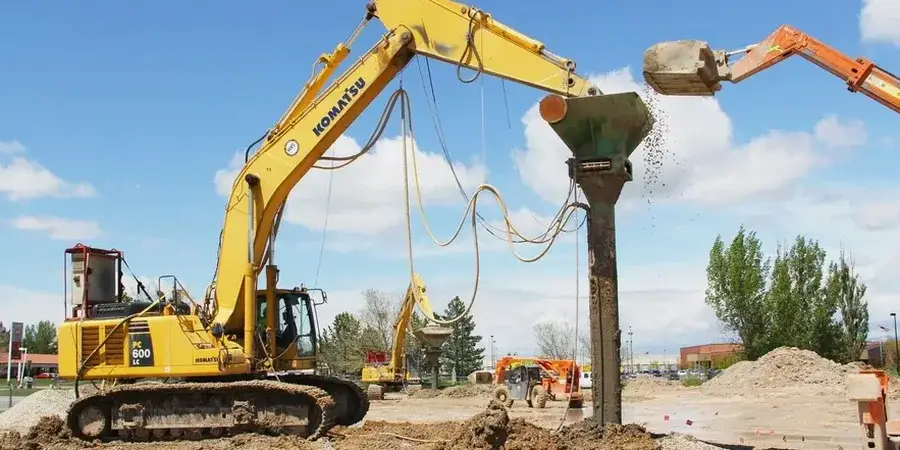
In Christchurch, ground improvement is not merely a construction option—it is a fundamental necessity shaped by the region's unique seismic history and complex subsurface conditions. This category encompasses a suite of geotechnical engineering techniques designed to enhance the engineering properties of soils, increasing their strength, stiffness, and resistance to liquefaction. Following the devastating Canterbury earthquake sequence of 2010-2011, the critical importance of these methods became starkly evident as vast areas of the city suffered catastrophic land damage. Today, ground improvement serves as the cornerstone for resilient rebuilding, enabling safe construction on sites that would otherwise be deemed too risky. It covers everything from densifying loose granular deposits to reinforcing soft cohesive soils, ensuring that new structures—from single-family homes to major commercial complexes—are founded on ground capable of withstanding future seismic events.
The geological setting of Christchurch directly dictates the specific ground improvement strategies required. Much of the city is built on deep alluvial deposits of the Canterbury Plains, consisting predominantly of interbedded layers of gravels, sands, and silts laid down by braided river systems. The eastern suburbs, in particular, are underlain by loose, saturated fine sands and silts with a shallow groundwater table, conditions that are notoriously susceptible to seismic-induced liquefaction and lateral spreading. This was the primary mechanism of destruction during the earthquakes. In contrast, the western areas on the Port Hills slopes face different challenges, including colluvium and loess soils prone to slope instability. A thorough understanding of this local geology, typically established through a detailed site investigation compliant with the New Zealand Geotechnical Society's guidelines, is the essential first step in designing any effective improvement programme.
All ground improvement works in Christchurch must strictly adhere to New Zealand's robust regulatory framework, which was significantly overhauled after the earthquakes. The key documents are the Building Act 2004 and the associated Building Code, particularly Clause B1 (Structure) which mandates that buildings must withstand loads without collapsing or causing injury. Compliance is typically demonstrated through verification methods like Acceptable Solutions and, more commonly for complex geotechnical works, specific engineering design. The Ministry of Business, Innovation and Employment (MBIE) provides definitive guidance, including the module on earthquake geotechnical engineering. All designs must be undertaken by a Chartered Professional Engineer (CPEng) and are reviewed by the Christchurch City Council's building consent authority. The technical backbone for liquefaction assessment is the MBIE/MfE 'Planning and engineering guidance for potentially liquefaction-prone land', which classifies land and dictates the required level of mitigation, making adherence to these standards non-negotiable for any project.
The range of projects requiring ground improvement in Christchurch is extensive and varies significantly in scale. Residential rebuilds on Technical Category 2 (TC2) and 3 (TC3) land, as defined by the Canterbury Earthquake Recovery Authority (CERA) land damage classifications, almost universally require some form of foundation-level improvement. For larger commercial and industrial structures, or critical infrastructure like hospitals and bridges, more advanced methods are essential. On sites with deep liquefiable sand layers, a technique like stone column design is frequently employed to install stiff, draining columns of compacted gravel that reinforce the ground and dissipate excess pore water pressure. For loose, clean sands that are not suitable for stone columns, vibrocompaction design offers a powerful alternative, using a vibrating probe to densify the soil in situ and dramatically increase its cyclic resistance. These deep-ground treatments are often coupled with shallow ground beams or stiffened raft slabs to create a fully integrated, high-performance foundation solution.
The primary goal is to mitigate seismic risks, especially liquefaction and lateral spreading, which caused widespread destruction during the 2010-2011 earthquakes. By densifying loose soils or reinforcing soft ground, the techniques increase soil strength and stiffness, preventing excessive settlement and ground failure, thereby protecting structures and infrastructure from future seismic events.
The requirement is primarily determined by the property's Technical Category (TC), a land damage classification from the Canterbury Earthquake Recovery Authority. TC2 and TC3 lands typically require specific ground improvement or enhanced foundation designs. A site-specific geotechnical investigation, assessing soil type, groundwater depth, and liquefaction vulnerability, is mandatory to define the exact scope of work needed for building consent.
The most common deep-ground techniques are stone columns and vibrocompaction, chosen based on the soil profile. Stone columns are effective in silty sands, providing both drainage and reinforcement. Vibrocompaction is ideal for clean, loose sands, densifying them with a vibrating probe. Shallow methods, like the removal and recompaction of susceptible soil layers, are also used for smaller residential projects.
Designs are governed by the Building Act 2004 and Building Code Clause B1 (Structure), with compliance verified through specific engineering design by a CPEng. The key guidance is the MBIE/MfE 'Planning and engineering guidance for potentially liquefaction-prone land'. All work must be approved by the Christchurch City Council, ensuring the design meets the prescribed performance standards for seismic resilience.
We serve projects across Christchurch and surrounding areas. More info.